
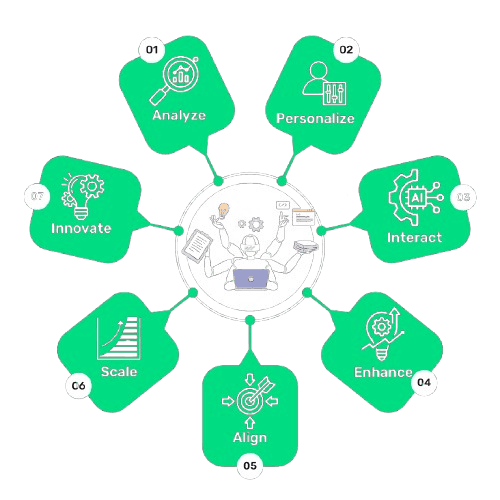
Trusted by 1500+ leading companies





60%
60%
Reduction in training administration time
<35
<35
Compliance tracking accuracy
45%
45%
Increase in course completion rates
What Is Localization & Translation?
Localization and Translation adapt Custom eLearning content to different languages, cultures, and regions. By tailoring visuals, examples, and assessments, they make Digital Learning more inclusive and help global teams access relevant, culturally appropriate training.

Localization vs. Translation
Understand how translation and localization differ when adapting learning content for global audiences.
Localization
Expanding globally means reaching diverse learners, but without proper localisation strategies, training impact is lost.
Inconsistent Messaging
Direct translations often miss cultural nuances.
Low Learner Engagement
Non-localized content feels irrelevant or confusing.
Compliance Gaps
Regional regulations demand accurate and localized training.

Multilingual Training Content — Deliver courses in multiple languages without losing context.
Cultural Adaptation — Ensure examples, visuals, and tone resonate with local audiences.
Quality Assurance — Professional translators and native reviewers for accuracy.
Our Project Showcase
Explore our diverse range of projects showcasing innovation, creativity, and excellence across various industries and disciplines.








Testimonials
Read testimonials from satisfied clients, sharing their experiences and successes with our services and solutions.
Maple Learning Solutions made the training project a great experience. Their team delivered engaging, well-structured training, welcomed feedback, and ensured a smooth process from planning to delivery. We highly recommend them.
Sr. Manager | L&D
Silver Skills
Maple Learning Solutions brought professionalism and creativity to our project. Their engaging eLearning solutions improved learner engagement and performance, while their team made collaboration very smooth.
Fatima Hassan
Operations Manager, Prime Health Group
"Maple Learning Solutions completely transformed our training effectiveness. Their AI-powered platform increased learner engagement by 300% and reduced training time by 40% while improving knowledge retention significantly."
Samantha Lee
Training Manager, NovaTech Inc.
"The personalized learning experience delivered by Maple's AI platform exceeded all our expectations. We saw immediate improvements in employee performance and a dramatic increase in training completion rates."
Rachel Kim
HR Manager, Apex Solutions
FAQ
Answers to your most common questions.
Here’s everything you need to know before getting started.
Can you translate eLearning content into multiple languages?
Yes. Learning content can be translated into multiple languages while maintaining the original meaning, structure, and learning objectives.
How is localization different from translation?
Translation converts content into another language, while localization also adapts the content to the target culture, region, visuals, examples, and formats.
Can existing eLearning courses be localized?
Yes. Existing courses can be adapted for different languages and regions, including text, visuals, assessments, audio, and other learning elements.
Can localized content maintain our brand identity?
Yes. Translated and localized content can follow your brand guidelines, terminology, tone, and visual identity across different languages.
How do you ensure translation accuracy?
Content can be reviewed for language accuracy, terminology, cultural relevance, consistency, and alignment with the original learning objectives